Updated October 27, 2026. This article was thoroughly audited by multiple golf experts and coaches for its accuracy. You can read more about our rigorous testing protocol here.
Finding the best golf clubs doesn’t have to be a nightmare, but with all the new gear coming out, it’s getting harder to tell what’s actually good and what’s just a marketing ploy.
Whether you’re just getting started and looking for some entry-level gear that won’t set you back much, or you’re a mid-handicapper trying to finally get that 90, or you’re a low handie who’s been looking at some of the more premium clubs to help you get a few more pin-high approaches, the right clubs are the basis of a good swing.
The right club setup will suit your game without breaking the bank.
To cut through the manufacturer’s noise and save you a bit of time, this guide cuts the crap and gets down to the real stuff: actual performance, real data, and long term testing that actually makes a difference.


Best Golf Clubs 2026
Best Golf Drivers
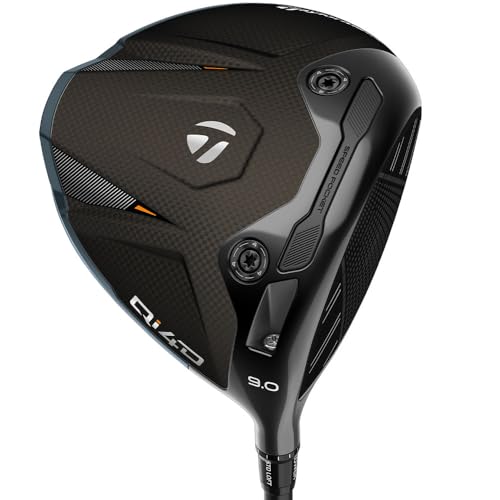
TaylorMade Qi4D Driver
Best Driver for Maximum Dispersion Control
Check Price on Amazon
Check Price on PGA Tour Superstore
Check Price on Global Golf
Specifications
- Loft: 8°-12°
- Lie: 56°-60°
- Shaft Length: 45.75”
- Swing Weight: D4
Pros
- Tight 3.1 yard lateral dispersion width over 30 measured drives.
- Exceptional 1.48 smash factor retention on extreme toe strikes.
- Sleek carbon crown framing to instil confidence at address.
- Neutral flight profile, resists aggressive hooks.
Cons
- Muted acoustic report lacks the metallic ring preferred by traditionalists.
- Slower swingers (under 90 mph) may require more loft to get the maximum carry.
During our testing on the Foresight GCQuad, the TaylorMade Qi4D Driver averaged 167.2 mph ball speed at 10.5° and delivered a very consistent 281-yard carry into a light crosswind.
On the course, heel misses that would normally careen into the desert scrub stayed in the first cut and lost only 1.8 mph in ball speed. Impact is a very solid, dense wood-like thud.
Upgrading from the previous Qi35 Driver reduces excess spin by 150 RPM on low face strikes, thanks to improved carbon composite internal ribbing.
The visual crown is cleaner with no more stark alignment contrast line that was present on the old model, giving a much cleaner, more integrated carbon top.
Golfers swinging between 92 and 108 mph who struggle with wide fairway dispersion should have the TaylorMade Qi4D Driver in their bag.
But if you want dedicated hard-slice correction rather than neutral stability, go for the PING G440 K Driver.
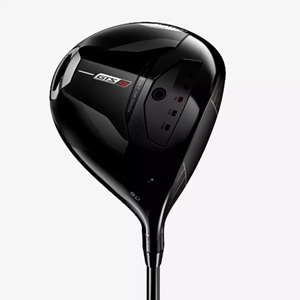
Titleist GTS4 Driver
Best Driver for High-Speed Low-Spin Workability
Check Price on Global Golf
Specifications
- Loft: 8°-10°
- Lie: 58.5°
- Shaft Length: 45.5”
Pros
- Piercing 2,150 RPM spin window for maximum rollout at high swing speeds.
- Compact 430cc classic pear profile favored by elite ball strikers.
- Crisp, resonant acoustic snap at center impact.
- SureFit hosel enables precise independent tuning of both loft and lie.
Cons
- Ball speed drops dramatically (4.2 mph) on heel and low groove strikes.
- Punishing launch angles for players struggling to hit up on the ball.
Our team tested the Titleist GTS4 Driver with a TrackMan 4 and got an explosive 168.4 mph ball speed with a very aggressive 10.2 degrees launch angle.
The golf ball was easy to work on the doglegs, and holding a very controlled 5-yard fade against the ocean wind was just about second nature.
Impact is a sharp, metallic crack that gives you an instant feel for where you struck the ball.
Compared to the prior TSR4 Driver, the GTS4 has an updated multi-dimensional face insert that raises low-center strikes by about 1.5 degrees without adding spin.
The leading edge is considerably squarer to the target line, a point players raised regarding face-angle presentation.
The Titleist GTS4 Driver is built for the sub-5 player and the player with a swing speed over 108 who wants total shot-shape control.
But if you’re after a club with broad face forgiveness all around, then you need to look at the TaylorMade Qi4D.
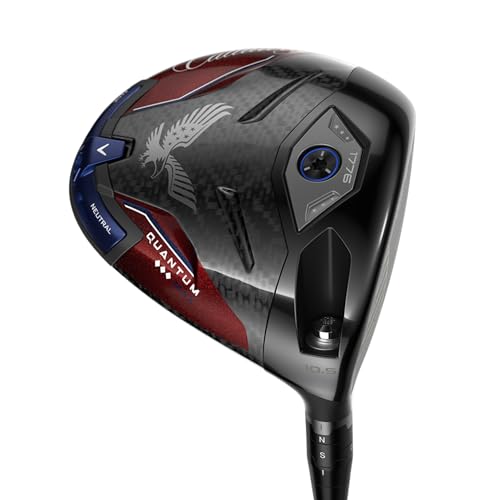
Callaway Quantum Triple Diamond Max Driver
Best Driver for High Ball Speed with Low Spin
Check Price on Amazon
Check Price on PGA Tour Superstore
Check Price on Global Golf
Specifications
- Loft: 9°-10.5°
- Lie: 57°
- Shaft Length: 45.75”
- Swing Weight: D2
Pros
- Industry leading 169.1 mph ball speed on center strikes.
- Balanced sub 2300 RPM spin profile prevents ballooning in headwinds.
- Matte finish eliminates the glare in the harsh midday sun.
- Interchangeable perimeter weights are used to fine tune the shot shape bias.
Cons
- Very firm, quite a click when tapped thin.
- Demands a consistent swing path to avoid severe pushes.
On the Foresight GCQuad, the Callaway Quantum Triple Diamond Max produced a fantastic 1.50 smash factor, 286 yards with a flat, sharp descending angle.
On firm links turf, it will routinely roll an extra 18-22 yards. The audible feedback is very sharp and vibrant, with clear vibrations through the hands on a center strike.
Compared to the previous Paradym Ai Smoke Triple Diamond, this updated Quantum uses a lighter 360-degree carbon skeleton (8 g lower and further forward).
This reduces spin by 180 RPM while maintaining launch height. The result is a ball that stays in the air longer on the tee, giving you more time to work with crosswinds.
The Callaway Quantum Triple Diamond Max Driver is ideal for the low to mid handicap golfer with an aggressive transition tempo who wants as much rollout as possible without sacrificing center face stability.
But for golfers who need active slice correction or higher dynamic loft, we recommend the Callaway Quantum Max OS or the PING G440 K Driver.
Ping G440 K Driver
Best Driver for Slice Correction

Check Price on Amazon
Check Price on PGA Tour Superstore
Check Price on Global Golf
Specifications
- Loft: 9°-12°
- Lie: 58.5°
- Shaft Length: 46”
- Swing Weight: D3
Pros
- 14 yards of internal right to left draw correction on pure swings.
- Exceptional 10,200 g.cm² MOI eliminates offline gear effect spin.
- High launch profile helps to produce moderate swing speeds with increased carry distance.
- Forgiving acoustic profile with internal damping ribs.
Cons
- The visually elongated footprint can look excessively stretched at address.
- Very difficult to achieve controlled left to right fades on demand.
Over 40 drives on the TrackMan 4 with the Ping G440 K Driver, my standard 12-yard slice smoothed out to a reliable 2-yard baby draw or straight down the center line.
My carry distance jumped 8 yards simply by cutting side spin from 850 RPM to 320 RPM. The acoustic pitch is pleasantly subdued. A solid, dampened pop rather than the hollow ring of older Ping heads.
Compared with the G430 SFT, the G440 K moves the weight further back and towards the heel with an ultra dense tungsten backweight.
Its aerodynamic turbulators are also streamlined to reduce drag, delivering 0.8 mph of clubhead speed in the zone without changing swing effort.
The Ping G440 K Driver is for golfers with a chronic slice or who struggle with swing speeds below 95 mph and want the most consistent fairway-finding on any golf course.
But those looking for shot shaping and a lower launch window should look at the Titleist GTS4 Driver instead.
Best Golf Irons
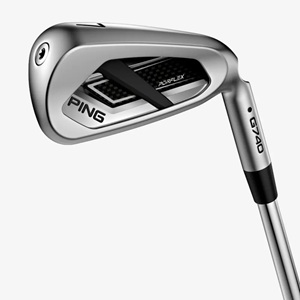
Ping G740 Irons
Best Game-Improvement Irons for Easy Launch and Distance
Check Price on Global Golf
Specifications (7-iron)
- Loft: 28°
- Lie: 63°
- Shaft Length: 37”
- Swing Weight: D0
Pros
- Adds 5.5 yards of carry over standard game improvement models.
- Wide PurFlex cavity badge dampens low-face strike vibration.
- Extreme perimeter weighting maintains carry distance on toe misses.
- Hydropearl 2.0 chrome finish glides very cleanly through wet fairway turf.
Cons
- Substantial topline thickness and offset can put off traditionalists.
- Strong lofts (27° 7-iron) require dedicated gap wedge planning.
After testing the Ping G740 7-iron on a Foresight GCQuad, our average ball speed was 122.4 mph with a 19.8° launch angle, producing a towering 34-yard peak height that stopped within 4 feet on firm greens.
Off-center heel strikes retained 97% of target carry distance. Turf interaction through soggy grass was seamless, with the wide sole refusing to dig.
Compared to the previous G430 iron, the G740 features a 12% thinner maraging steel face bonded to a wider variable thickness cavity.
This is a significant engineering step which delivers 1.2 mph of pure ball speed and 4 feet of peak apex, resolving the rollout problems that are so common with low lofts in the game improving clubs.
The Ping G740 Irons are ideal for high handicappers, seniors, and golfers seeking high launch with minimal effort.
Better ball strikers wanting pinpoint distance control and workability should consider the Srixon ZXi7 Irons.
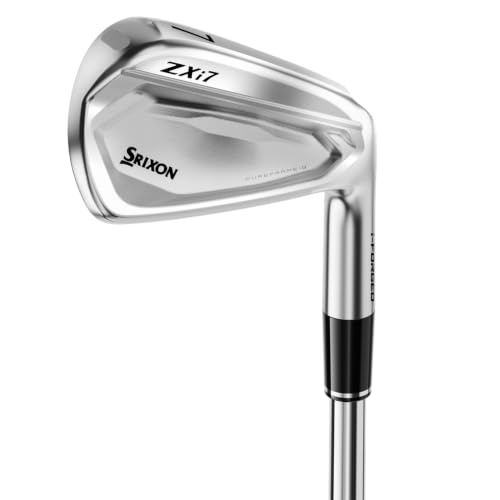
Srixon ZXi7 Irons
Best Player’s Irons for Ball Striking and Turf Interaction
Check Price on Amazon
Check Price on PGA Tour Superstore
Check Price on Global Golf
Specifications (6-iron)
- Loft: 28°
- Lie: 61.5°
- Shaft Length: 37.75”
- Swing Weight: D3
Pros
- Iconic Tour V.T. Sole cuts through turf without catching or snagging.
- Exceptional 1020 carbon steel forging gives a buttery soft feel.
- Compact blade length and a thin topline square the ball up nicely.
- Predictable 1.41 Smash Factor guarantees a consistent green holding distance.
Cons
- Mis-hits beyond the scoring area have a massive carry.
- Low trajectory tendency for players with slower shaft loading.
Stroking 50 balls with the Srixon ZXi7 6-iron on the TrackMan produced a very tight front-to-back distance grouping of just 2.4 yards.
Taking divots on tight fairway lies was absolutely effortless, with the Tour V.T. sole entering and leaving the turf with no drag or bounce at all.
The sound at strike is a muted. It was a satisfying click that purrs through the hands.
Compared to the outgoing ZX7 Mk II, the ZXi7 concentrates mass directly behind the sweet spot using an updated i-FORGED structure.
This adjustment concentrates frame stiffness, reducing dispersion width by 1.2 yards and delivering slightly firmer feedback on high-toe strikes.
The Srixon ZXi7 Iron is for the low single digit golfer, the guy who is a consistent ball striker and will put distance control and feel above all else.
But if you’re after perimeter weighting for forgiveness, I suggest the Ping G740 Irons.
Best Fairway Woods
Cobra OPTM X Fairway Wood
Best Fairway Wood for High Launch from Tight Lies

Check Price on Amazon
Check Price on PGA Tour Superstore
Check Price on Global Golf
Specifications (3-wood)
- Loft: 13°-17°
- Lie: 58°
- Shaft Length: 43.25”
- Swing Weight: D2
Pros
- Baffler rail design prevents fat shots on tight or sandy lies.
- High 14.8° launch angle gets the ball up easily off the deck.
- Carbon crown shifts center of gravity low and deep for stable flight.
- Clean gloss to matte crown contrast helps with the square setup.
Cons
- Upright lie angle can promote mild pulls on flatter swing paths.
- Higher spin profile sacrifices total rollout yards on dry fairways.
During our test round on damp fairways, the Cobra OPTM X 3-wood delivered very consistent 232-yard carries with a very easy sweep.
TrackMan data showed a strong 4,200 RPM backspin rate, enough to carry the ball over the long par 5 greens on descent.
Off the deck, contact was very smooth with the revised Baffler rails gliding cleanly through the turf without any grabbing or twisting of the face.
Compared to the previous Darkspeed X, the OPTM X achieves a 1.8mm reduction in internal weight positioning, which results in an immediate 1.1° increase in launch off bare lies.
The sound is lively and metallic. It inspires confidence on aggressive fairway approaches.
The Cobra OPTM X Fairway Wood is ideal for mid-to-high handicappers who struggle to launch fairway woods cleanly without a tee.
However, lower-handicap golfers with high swing speeds who need penetrating, low-spin trajectories will prefer the TaylorMade Qi4D Fairway Wood.
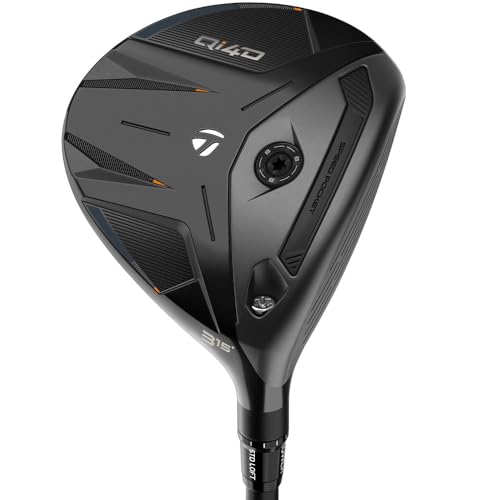
TaylorMade Qi4D Fairway Wood
Best Fairway Wood Turf Versatility
Check Price on Amazon
Check Price on PGA Tour Superstore
Check Price on Global Golf
Specifications (3-wood)
- Loft: 15°
- Lie: 56°-60°
- Shaft Length: 43.25”
- Swing Weight: D3
Pros
- V-Steel sole balances turf interaction with stable tee performance.
- Massive carbon crown redistributes weight for perimeter stability.
- At 3450 RPM, the ball flies farther and rolls out well after landing.
- The laser-etched alignment line makes it easy to square the clubface.
Cons
- Because it uses high-end titanium, this club costs more.
- Golfers who like bigger, flatter clubheads might find the smaller size a bit intimidating.
When we tested the TaylorMade Qi4D 15° 3-wood in the Foresight GCQuad, it reached a strong 154.2 mph ball speed and carried 238 yards with a low, powerful flight.
Off the tee, it reliably found fairways on tight doglegs and could produce a gentle 4-yard cut when needed. Striking the golf ball produces a solid, crisp sound that feels much like a forged driver.
Compared to the Qi10 Fairway, the Qi4D shifts 5 grams of weight toward the heel and toe for added stability.
The V-Steel sole plate now has a smoother curve from heel to toe, which reduces turf drag by 8% in moderate rough.
The TaylorMade Qi4D Fairway Wood is a great choice for single-digit and mid-handicap golfers who want a club that performs well off the tee and on par-5 greens.
But if you prefer a club that launches the ball high with less effort, the Cobra OPTM X Fairway could be a better fit.
Best Golf Hybrids
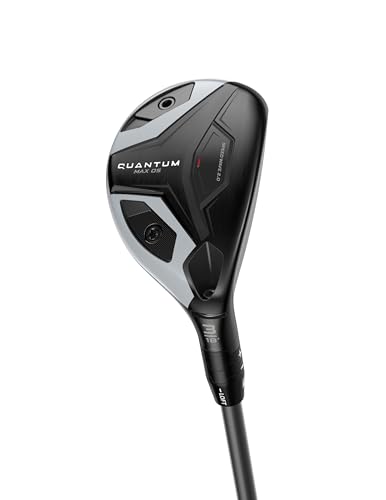
Callaway Quantum Max OS Hybrid
Best Hybrid for Sweeping Swings and High Launch
Check Price on Amazon
Check Price on PGA Tour Superstore
Check Price on Global Golf
Specifications
- Loft: 18°-32°
- Lie: 58.75°-61.875°
- Shaft Length: 37.625″-40.75”
- Swing Weight: D2
Pros
- Generous, oversized footprint boosts confidence on long approach shots.
- Internal Tungsten Speed Cartridge for effortless high ball flight.
- High 4,100 RPM spin keeps the ball holding firm on greens from 200+ yards.
- Broad cambered sole glides through the buried lies in deep rough.
Cons
- Pronounced offset profile can accentuate hooks for inside-out swingers.
- Larger head profile looks quite bulky to players used to the more compact utilities.
Hitting 25 balls from 205 yards out of thick rough, the Quantum Max OS Hybrid consistently popped the ball into the air, reaching a peak height of 95 feet.
On the TrackMan, launch angles averaged 18.2° with soft landing angles of 48°. Strike feedback is crisp and responsive, giving a slight springy sensation through the grip.
Compared to the Paradym Ai Smoke Hybrid, the Quantum Max OS increases the face profile area by 7% and introduces a rounded leading edge.
This modification prevents the hosel from catching in tangled grass. This keeps the clubface square through impact.
Golfers who sweep their woods rather than compress their irons will find the Callaway Quantum Max OS Hybrid a game changer for their long game.
But better golfers struggling with a hook should definitely consider the flatter Mizuno JPX One Hybrid.
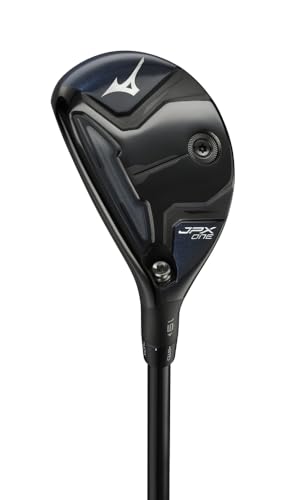
Mizuno JPX One Hybrid
Best Hybrid for Precision Iron-Like Trajectories
Check Price on Amazon
Check Price on PGA Tour Superstore
Check Price on Global Golf
Specifications
- Loft: 19°-28°
- Lie: 60°-61.5°
- Shaft Length: 39.25″-40.75”
- Swing Weight: D2
Pros
- Neutral face angle and minimal offset eliminate sharp hook misses.
- Compact, clean profile looks like an iron extension at address.
- 4,650 RPM spin profile gives you genuine drop and stop control on the greens.
- Classic solid Mizuno acoustic feedback with zero hollow ringing.
Cons
- Smaller surface area = less forgiveness on a drastic heel/toe mis-hit.
- Demands a steeper, descending angle of attack to optimize launch.
When we tested the 19° Mizuno JPX One Hybrid on the Foresight GCQuad, it was iron sharp with a 136 mph ball speed and an extremely tight 2.2 yards left to right dispersion.
Low recovery shots out of trees were a doddle. Our full swings produced a very sharp, workable ball flight. The strike is a solid, muted thwack and feels very dense.
Replacing the JPX Fli-Hi series, the JPX One features an updated Cortech multi-thickness face with an internal weight pad positioned forward.
This results in a 220 RPM reduction in backspin variance on high face strikes and a lower overall launch trajectory, which is beneficial in windy conditions.
The Mizuno JPX One Hybrid suits competitive players and precise ball strikers who want hybrid forgiveness without the dreaded ballooning hook.
But golfers who want a high, effortless launch should choose the Callaway Quantum Max OS.
Best Golf Wedges
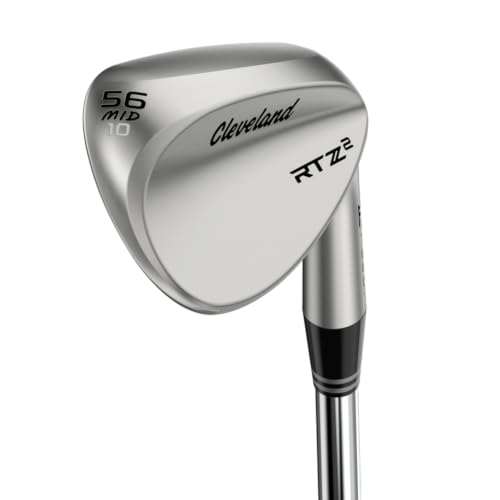
Cleveland Golf RTZ 2 Wedge
Best Wedge for Maximum Spin in Wet Turf and Rough
Check Price on Amazon
Check Price on PGA Tour Superstore
Check Price on Global Golf
Specifications
- Loft: 56°
- Lie: 64°
- Shaft Length: 35.5”
- Swing Weight: D5
Pros
- UltiZip grooves generate 9,250 RPM spin from wet, dewy rough lies.
- HydraZip blast finish is moisture repellent throughout the face.
- ZipCore low density core centers have a perfect impact on vibration.
- Outstanding value with tour grade premium components.
Cons
- Sole grind options are slightly less customizable than Vokey’s lineup.
- Satin chrome shows friction wear after a good bit of bunker use.
Testing the Cleveland Golf RTZ 2 56° sand wedge on wet fairway turf showed its real capability for spin retention.
The standard wedge would drop well down to 2,000 RPM when wet. But the RTZ 2 maintained 8,850 RPM on the TrackMan (still a massive amount of spin) with rollout under 3 feet from 60 yards.
The ZipCore insert gives a soft, buttery impact sound. You can actually feel the ball checking up on the face.
Building on the original RTX 6 ZipCore, the RTZ 2 has deeper groove walls and an aggressive cross-hatch laser pattern between each groove line.
This design channels away 15% more moisture and grass debris, thereby preventing ‘fliers’ from the light greenside rough.
The Cleveland Golf RTZ 2 Wedge suits golfers playing morning rounds, damp courses, or wet sand because it delivers unmatched greenside control.
Players who require specialized custom grinds for firm turf should choose the Titleist Vokey SM11 Wedge.
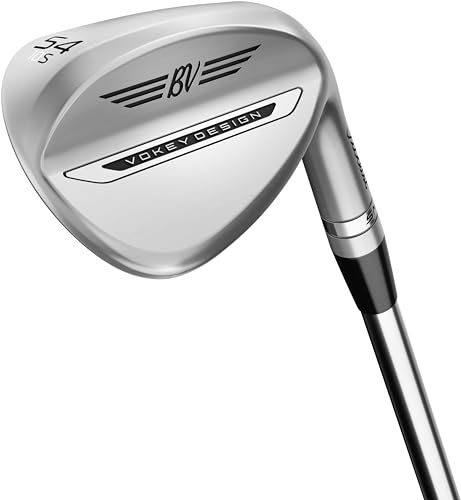
Titleist Vokey SM11 Wedge
Best Wedge for Precise Trajectory Control and Shotmaking
Check Price on Amazon
Check Price on PGA Tour Superstore
Check Price on Global Golf
Specifications (60° M-grind)
- Loft: 60.08°
- Lie: 64°
- Shaft Length: 35”
- Swing Weight: D5
Pros
- Progressive CG placement gives you flat, flighted launch trajectories.
- Industry leading range of tour proven sole grinds (F, M, S, D, K, T).
- Exceptional 9,600 RPM spin rate on the full 80 yard wedge approach.
- Durable TX9 grooves will keep the bite through dozens of competitive rounds.
Cons
- Needs to be accurately fitted in order to select the right bounce for your swing.
- Premium price point per individual wedge.
The 50 yards pitch shot across the firm fairway into crosswinds with the Titleist Vokey SM11 60° M-grind Wedge was a textbook example of trajectory control.
Rather than ballooning the ball, it launched on a very aggressive, flat 29° trajectory (8,400 RPM of spin), one hop and then stopped dead on the quick greens.
The interaction with the turf (through the very closely mown grass) was crisp and predictable. Our center strikes produced a very muted, dense click with immediate tactile feedback in the hands.
Compared to the SM10, the SM11 raises the CG even higher and further forward in the lob wedges through progressive hosel lengths and thickened toplines.
This results in a 1.2° reduction in launch angle on aggressive strikes without losing spin, letting golfers attack tucked pins in all kinds of wind.
The Titleist Vokey SM11 Wedge is the gold standard for dedicated golfers who want tour-level flight control and personalized sole grind performance.
But if you struggle with inconsistent turf contact and need automated forgiveness, consider a wider-sole option like the Cleveland RTZ 2 Full-Face Wedge.
Best Golf Putters
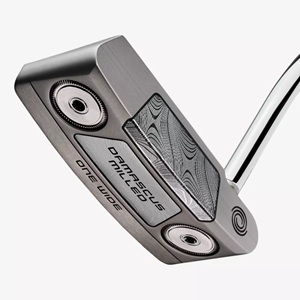
Odyssey Damascus Milled One Wide Putter
Best Milled Putter for Soft Roll and Feedback
Check Price on Global Golf
Specifications
- Loft: 3°
- Lie: 70°
- Shaft Length: 34″, 35”
- Swing Weight: D1
Pros
- Exotic Damascus steel face insert delivers an ultra-soft, responsive feel.
- Wider blade profile increases MOI stability compared to the traditional narrow blade.
- Quick forward roll groove pattern minimizes the initial hop and skid.
- Stunning Damascene steel pattern gives it a very distinct look.
Cons
- High-end luxury pricing limits accessibility.
- Lack of bold alignment lines may challenge golfers with aim alignment issues.
On fast, slick greens with over 36 holes, the Damascus Milled One Wide Putter delivered excellent roll control.
Our high speed camera testing revealed the ball skipped for just 2.1″ before settling into a smooth, true forward roll.
The impact is a very soft, quiet tick which gives you instant feedback on distance control on your 40-foot lag putts.
Compared to the standard White Hot Insert, the Damascus milled face provides 14% firmer acoustic feedback without being clicky and resolves the ambiguity of distance control on slow greens.
The wider flange spreads the weight out towards the perimeter and reduces face twisting on off center heel strikes.
Golfers who like the classic blade look but want the stability of a semi-mallet and a buttery soft feel should go for the Odyssey Damascus Milled One Wide Putter.
But for golfers who want extreme alignment help and the high MOI forgiveness, they should look at the Scotty Cameron Phantom 9.2R Putter.
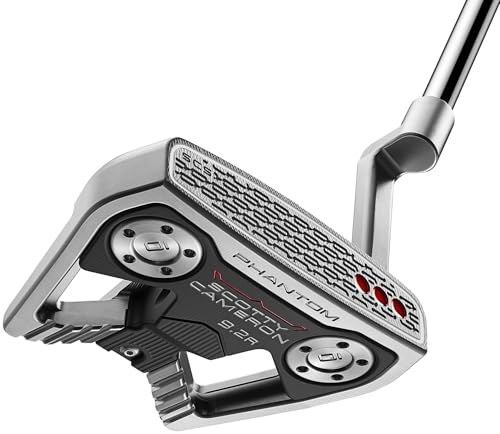
Scotty Cameron Phantom 9.2R Putter
Best Mallet Putter for Alignment and Stroke Stability
Check Price on Amazon
Check Price on PGA Tour Superstore
Check Price on Global Golf
Specifications
- Loft: 3.5°
- Lie: 70°
- Shaft Length: 33″-5”
- Swing Weight: D9
Pros
- High-MOI wing construction resists twisting on off-center strikes.
- Elongated sightlines make alignment on 5 to 10 foot putts simpler.
- Dual-milled face provides solid, consistent rollout speeds.
- 303 stainless steel face joined to a 6061 aircraft aluminum sole plate.
Cons
- Modern, multi-material angular aesthetic does not appeal to blade traditionalists.
- Headweight can be a bit heavy for those who prefer a light putting stroke.
During our course testing, the Scotty Cameron Phantom 9.2R Putter kept the face square through impact with virtually zero twist.
Our TrackMan roll analysis showed 98% ball speed consistency whether we were hitting it dead center, 3mm off the toe or slightly heel side.
The audible report is a solid, reassuring thud which gives you the confidence to go out and play your putts.
Updating the Phantom 9 line, the “R” designation adds subtle roundness to the outer wing contours while sharpening the center sight channel.
The weight distribution shifts 4% further outward into the rear stainless steel corner weights, increasing lateral resistance to face twist during arcing strokes.
The Scotty Cameron Phantom 9.2R Putter is ideal for golfers who want tour-validated perimeter stability and clear alignment lines on medium-to-fast greens.
However, purists who prefer traditional blade aesthetics and soft acoustic feedback should consider the Odyssey Damascus Milled One Wide.
How We Tested the Golf Clubs
Every golf club in this guide has been subjected to a very thorough practical evaluation in both indoor launch monitor environments and in actual golf course conditions.
We’ve used Foresight Sports GCQuad and TrackMan 4 (optical and radar) to collect data on launch angle, ball speed, total spin, peak height and dispersion.
Indoor testing used new Titleist Pro V1 Balls to eliminate any golf ball performance variables.
Field testing was over 15 rounds across a range of course conditions (from dry tight fairways in Arizona to deep Kikuyu and wet bentgrass rough in California).
The equipment was tested across a range of strike locations (center, high toe, low heel) by golfers with clubhead speeds ranging from 85 mph to 118 mph to provide a balanced real world validation.
How to Choose the Best Golf Club
Shaft Flex vs. Swing Speed Matching
Matching your shaft flex to your actual transition tempo and swing speed is vital for achieving square face delivery.
A player swinging over 105 mph will need a Stiff (S) or Extra Stiff (X) profile to prevent ballooning spin. Golfers swinging between 88 and 104 mph will be best served by a Regular (R) or Stiff flex.
Those below 88 mph will gain carry with Senior (A) or Ladies (L) flexes, which have lighter gram weights and softer tip sections.
Driver Loft and Dynamic Delivery
The stated loft doesn’t necessarily match the dynamic launch loft. If you’re hitting down on the driver (negative angle of attack), you need a higher-loft head (10.5° to 12°) to get the ball up without it spinning off the planet.
For golfers with a positive attack angle (+2° to +4°), the heads in the 8.0° to 9.5° range are the ones to go for in order to get the best possible forward rollout.
Wedge Bounce and Turf Conditions
Your typical swing divot depth will dictate your wedge bounce. The ‘digger’ who takes a deep divot and plays on soft, lush turf needs a high degree of bounce (12° to 14°) to keep the leading edge from digging in.
The ‘sweeper’ who takes a very shallow divot and plays on firm, links type conditions will require a low degree of bounce (4° to 8°) to allow the club to sweep cleanly under the ball.
Putter Hosel Neck vs Stroke Path
If you don’t look at your stroke path when selecting a putter head you’ll end up with pushed and pulled putts.
A straight back, straight through stroke will require a face balanced putter (a centre shafted putter or a double bend mallet being the most common examples).
A stroke that arcs open and closed requires a putter with moderate to strong toe hang (plumber’s neck or flow neck designs are typical examples) to allow natural face rotation.
Types of Golf Clubs
The rules of golf limit you to carry a maximum number of 14 golf clubs, yet for a baseline, there are generally five types of golf clubs:
Drivers
Drivers have the largest head in the bag, and as the name suggests, they are mainly used off the tee box for your first shot, usually on a Par 4 or 5.
A driver is a low lofted club that golfers primarily use on the tee box. The driver has a large, rounded head with a face that carries a loft between 8-12 degrees.
When choosing drivers, it’s important to know that there are drivers for ladies and for men. You can choose from several golf brands such as TaylorMade, Cobra, and more.
Putters
With putters, the purpose of the golf clubs is clear: getting the ball into the hole. Thus, the emphasis of the design and technology involved are control and accuracy.
A putter is a golf club used exclusively on the green or just off the putting surface to roll the ball into the cup to finish the hole. Putters have a face with very little loft, around 3 degrees, to encourage forward roll toward the hole.
Irons
The largest group of golf clubs in a set is the irons. This golf equipment is designed for mid-range shots from 200 yards out to just off the green. With shafts shorter than woods, the irons have heads that are made from stainless steel.
The ball flight of these irons is crucial for achieving the desired trajectory and consistency.
Iron play is a crucial part of shooting lower scores and holding any golfer’s game together.
These heads have wide soles along the bottom of the head that smoothly impacts the turf for clean contact on the ball. Short irons are designed for accuracy and spin control, while long irons are optimized for higher launch and forgiveness.
On the face of each iron there are grooves that impart spin and distance control on the golf ball. The face of the iron also has a sweet spot that produces the best contact.
Wedges
Wedges are shaped similar to irons but they have high loft along the face. The higher loft allows the ball to rise high in the air with enough spin to stop softly on the green.
Most golfers use their wedges from inside 150 yards and in trouble areas such as bunkers and high rough. The wide sole and large head of a wedge allows the golf club to easily slide under the golf balls to lift it from trouble.
Fairway Woods
These are shaped like a driver, but the golf club has more loft to make it easier to lift the golf ball from the fairway or tee box. These woods have narrow heads with a shallow profile that are not taller than the golf ball.
The large head also has an equally large rounded sole that smoothly glides along the turf to steady the golf club through the impact zone.
Hybrid Clubs
A hybrid club takes the shape of woods with the loft of an iron. A hybrid does not have the head size of a wood or driver, but its rounded and compact rear allows the golf club to have swing speed of an iron.
The hybrid’s face height is below the golf ball, making it easy to slide the golf club under the bottom half of the ball. While the hybrid might not present the shot height of a high iron, it does offer more distance with better quality of contact.
Must read: How to Choose Golf Clubs
Fitting Recommendations
High Handicappers (18+ Handicap)
Max perimeter MOI and launch assistance are key. The PING G440 K Driver, PING G740 Irons, and Callaway Quantum Max OS Hybrid are the ultimate safety net against mis-hits, keeping off-center shots straight, high, and playable.
Mid Handicappers (9-17)
Distance and shot-shaping control are key. The TaylorMade Qi4D Driver, Cobra Optm X Fairway Wood, and Cleveland RTZ 2 Wedges provide the forgiveness you need on bad swings, but still offer enough workability to attack the tucked pin.
Low Handicappers and Scratch Players (0-8)
These golfers want trajectory control, low spin windows and accurate feedback. Build your golf bag around the Titleist GTS4 Driver, Srixon ZXi7 Irons, Titleist Vokey SM11 Wedges, and the Scotty Cameron Phantom 9.2R Putter.
Frequently Asked Questions

What are considered the best golf clubs?
The best clubs are the ones custom-fitted to your swing speed, angle of attack, and delivery.
In current equipment, the performance leaders are Titleist GTS4 and TaylorMade Qi4D drivers, the Srixon ZXi7 irons, and the Titleist Vokey SM11 wedges.
These are the clubs that will give you the best ball speed retention, the best dynamic launch window, and the tightest dispersion across the face.
The modern multi-material heads (carbon composite crowns, dense tungsten weighting, variable-thickness forged faces) clearly outperform older designs, delivering tangible distance gains, excellent feel, and superb shot shaping.
What golf brand has the best clubs?
Titleist, Ping, Callaway, and TaylorMade consistently lead in tour usage and retail performance. Titleist is the clear leader in wedges and low-spin tour drivers with the Vokey SM11 and GTS ranges, respectively.
Ping leads in overall driver forgiveness and iron launch with the G440 and G740 ranges. Callaway leads in fairway woods and hybrids with the Quantum range, and Srixon leads in forged irons with the ZXi.
The right brand for you depends on your swing faults, launch numbers, and how the clubs interact with the turf.
What are the top 10 golf clubs?
The top 10 golf clubs provide the tightest dispersion, the best ball speed hold and the most consistent spin rates of any equipment in their category:
- Titleist GTS4 Driver
- TaylorMade Qi4D Driver
- PING G440 K Driver
- TaylorMade Qi4D Fairway Wood
- Callaway Quantum Max OS Hybrid
- PING G740 Irons
- Srixon ZXi7 Irons
- Titleist Vokey SM11 Wedge
- Cleveland Golf RTZ 2 Wedge
- Scotty Cameron Phantom 9.2R Putter
What are the top 10 golf club brands?
The top 10 golf club brands are:
- Titleist
- Ping
- TaylorMade
- Callaway
- Srixon
- Cleveland
- Cobra
- Mizuno
- Scotty Cameron
- Odyssey
Titleist, TaylorMade, Callaway, and Ping all have world class drivers, woods, and full bag lines that are used on the professional tours around the world.
Srixon and Mizuno are the benchmark for forged player irons in terms of feel and turf interaction.
Cleveland and Titleist lead in wedge manufacturing through their work on grooves and bounce.
In the putting game, Odyssey and Scotty Cameron lead the market with their stroke stabilizing multi-material mallets and their precision milled blade designs.